
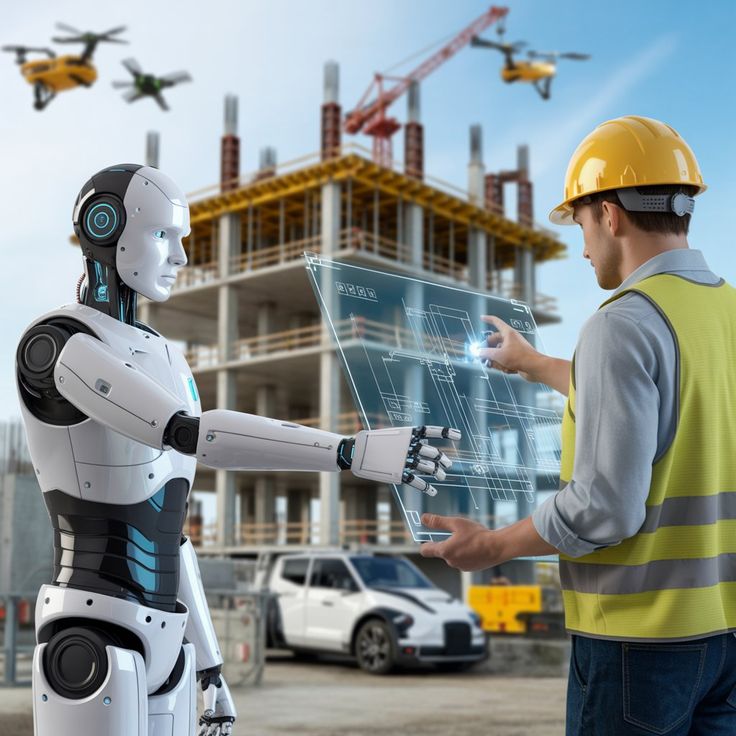
Let’s Address the Big Question Everyone Is Afraid to Ask Is It True That AI Will Replace Jobs in 2030?
You have probably heard it at least once this year. Maybe you read a headline that made your stomach drop. Maybe a colleague brought it up over lunch. The question is everywhere right now — is it true that AI will replace jobs?
It is a fair question. And it deserves an honest answer. Not a panicked one. Not an overly optimistic one either. Just a real, grounded look at what is actually happening in the world of work right now.
Here is the short answer. Yes, AI is changing jobs. But replacing them entirely? That is a much more complicated story. The reality is nuanced, and understanding it could be the most career-defining thing you do this year.
According to the World Economic Forum’s Future of Jobs Report, 85 million jobs may be displaced by automation by 2025 — but 97 million new roles are expected to emerge. That context matters enormously when you are trying to make sense of the headlines.
So let us take a breath. Put down the doom-scrolling for a moment. And walk through what the data, the experts, and real-world examples are actually telling us about AI and the future of work.
What AI Is Actually Very Good At
To understand whether AI will replace your job, you first need to understand what AI is genuinely good at. Because it is not good at everything. Not even close.
AI excels at repetitive, rule-based tasks. Things that follow a clear pattern and require processing large amounts of data quickly. AI does these things faster and more accurately than any human ever could. McKinsey’s research on automation confirms that the most automatable activities are those involving predictable physical work and basic data processing.
Think about data entry. Invoice processing. Basic customer service queries. Simple image recognition. Quality control checks on a production line. These are the kinds of tasks where AI genuinely shines.
If your job consists mostly of these types of activities, then yes — AI is coming for those specific tasks. That is just the honest truth. Ignoring it does not make it less real.
But here is what is really interesting. Most jobs are not just one thing. Most jobs are a collection of tasks. And AI might be able to handle some of those tasks brilliantly while being completely useless at others.
A customer service representative does not just answer queries. They read emotions. They de-escalate tense situations. They make judgment calls in real time. They build rapport with customers. Harvard Business Review puts it well — AI can handle the easy ticket. It struggles enormously with the complicated human moment.
AI Is Not Just Replacing People Who Cannot Use It — This Is Important
Here is something that barely gets said out loud but absolutely needs to be. A lot of the conversation around AI and jobs goes like this — learn to use AI and you will be fine. Ignore AI and you will be replaced. While that is partially true, it is dangerously oversimplified.
The reality is that AI is not only taking jobs from people who refuse to use it. It is also beginning to threaten roles held by highly skilled, highly educated, and deeply experienced professionals who use AI tools every single day. This is the part of the conversation that makes people genuinely uncomfortable.
Think about junior lawyers who spent years in law school. AI tools like Harvey are now handling document review, contract analysis, and legal research in minutes. Think about junior doctors who trained for years. AI diagnostic tools are reading scans and identifying conditions faster than many clinical professionals. Think about junior software developers. GitHub Copilot is writing entire blocks of functional code from a simple text description.
These are not people who refused to embrace technology. Many of them actively use these AI tools themselves. But the tools are so capable that the entry-level work that once required a human — and that human’s salary — is being absorbed by the software.
Goldman Sachs research has estimated that generative AI could automate up to 25% of current work tasks across the US and Europe. Crucially, white-collar, knowledge-based roles — the kind that require degrees and professional qualifications — are among the most exposed. Not just factory floor jobs. Not just data entry clerks. Lawyers. Accountants. Analysts. Designers. Writers. Coders.
This does not mean those professions are disappearing. It means the number of entry-level positions within those professions is shrinking. And the professionals who survive and thrive are the ones who can operate at a level of strategic thinking, creativity, and human judgement that AI genuinely cannot reach — regardless of how good the tools get.
So the updated, more honest version of the advice is this. Do not just learn to use AI. Learn to think at a level that AI cannot. Use AI to handle the mechanical parts of your work. Focus your human energy on the parts that require genuine insight, relationship, and wisdom. That combination is what makes you truly irreplaceable in 2026 and beyond.
The Jobs AI Cannot Touch (And Why)
Here is where things get really interesting. There is a whole category of work that AI simply cannot replicate — at least not in any meaningful way right now.
Anything that requires genuine human creativity is still very much in your corner. Writing a strategy that resonates emotionally with a specific audience. Designing a product experience that feels truly intuitive. Telling a story that moves people. These things require a depth of human understanding that AI cannot manufacture. The MIT Work of the Future initiative consistently highlights human creativity and judgement as the most durable competitive advantages workers have over automation.
Jobs that require physical dexterity in unpredictable environments are also largely safe. A plumber dealing with an unusual pipe configuration. A nurse reading a patient’s non-verbal cues. A chef improvising based on what is fresh today. These require human judgement and adaptability in the moment that no current AI system can match reliably.
Roles that are built on deep human trust and relationship are also highly resilient. A therapist. A mentor. A career coach. A social worker. People do not want to pour their hearts out to a chatbot. The British Association for Counselling and Psychotherapy has been clear that the therapeutic relationship itself — the human connection — is the primary driver of positive outcomes. AI cannot replicate that.
And leadership? Real leadership — the kind that inspires people, navigates politics, and holds a team together through uncertainty — remains deeply human. AI can generate a strategy document. It cannot lead a team through a crisis with empathy and conviction. LinkedIn’s Global Talent Trends report consistently ranks human leadership and communication skills as the most sought-after qualities in senior candidates.
So before you panic about your career, ask yourself honestly. How much of my job involves creativity, relationships, physical judgement, or leadership? Because those are your shields.
What the Data Actually Says About AI and Jobs
Let us look at some real numbers instead of relying on headlines designed to scare you into clicking.
The World Economic Forum has consistently reported that AI will eliminate some jobs. But it will also create new ones. The net picture is not simple destruction. It is transformation.
New roles are emerging that did not exist five years ago. Prompt engineers. AI ethicists. Machine learning operations specialists. Data governance managers. These are real jobs being filled by real people right now. LinkedIn’s Emerging Jobs Report has tracked the explosive growth of these brand new tech roles year on year.
History also gives us important perspective here. Every major technological revolution has sparked the same fear. The printing press. The industrial revolution. The internet. Every single time, people were convinced that mass unemployment was coming. The Oxford Martin School’s research on technology and employment provides fascinating historical context on how economies have repeatedly adapted to major technological shifts.
Every single time, the economy adapted. New industries emerged. New jobs were created. Workers who retrained and evolved with the technology thrived. Those who refused to adapt struggled.
That does not mean the transition is painless. It is not. Real people in specific industries are feeling genuine disruption right now. The UK Office for National Statistics has identified specific job categories most at risk of automation in the UK, and that data deserves to be acknowledged honestly and without dismissal.
But the historical pattern is clear. Technology shifts the nature of work. It does not end it. The question is never whether jobs will exist. It is always whether you are positioning yourself for the jobs that will.
What You Should Actually Do Right Now
Here is the most important part of this entire conversation. What do you do with all of this information? How do you respond in a way that protects and advances your career?
First, audit your own role honestly. Write down every task you perform in a typical week. Then ask yourself — could AI do this task reliably? If the answer is yes for most of your tasks, that is a signal to start upskilling now. Not in a panic. With purpose and a plan. The UK Government’s National Skills Fund offers funded courses for adults looking to upskill in exactly this kind of situation.
Second, lean into the skills AI cannot replicate. Communication. Critical thinking. Emotional intelligence. Creativity. Strategic decision making. These are not soft skills. They are survival skills in an AI-powered economy. The Chartered Institute of Personnel and Development (CIPD) has highlighted these human-centred skills as the top priority for workforce development in the AI era.
Third, learn how to work with AI rather than against it. But remember what we said earlier. Using AI is no longer enough on its own. You need to be operating at a level of strategic thinking and human insight that goes well beyond what the tools themselves can produce. Platforms like Coursera and LinkedIn Learning offer excellent AI literacy courses that are accessible to complete beginners and help you develop that higher-level thinking alongside your technical skills.
Think about it this way. A writer who uses AI to research faster, outline smarter, and edit more efficiently is not being replaced by AI. They are becoming three times more productive with the same amount of time. That writer becomes more valuable, not less. But a writer who only uses AI without bringing genuine creative insight and strategic thinking to their work? They are far more vulnerable than they realise.
Fourth, consider transitioning into tech if you have been thinking about it. The tech industry is where the new jobs are being created fastest. Cloud computing, machine learning, data analysis, cybersecurity — these fields are growing faster than almost any other sector in the global economy. AWS Training and Certification and Google Career Certificates are two of the most respected and accessible pathways into tech for career switchers with no prior experience.
You do not need to become a software engineer overnight. Start small. Take one course. Earn one certification. Understand one new tool. Each step adds another layer of resilience to your career in an uncertain world.
Fifth, stay curious and keep learning. The professionals who will be most protected from AI disruption are the ones who never stop learning. AI models are trained on existing knowledge. Human curiosity and the ability to think about entirely new problems is still uniquely yours. Resources like MIT OpenCourseWare and freeCodeCamp make world-class learning completely free and available to anyone with an internet connection.
The Honest Bottom Line on AI and Jobs
So — is it true that AI will replace jobs? Here is the most honest answer you will get.
AI will replace certain tasks within jobs. It will make some entire roles obsolete. That is already happening in pockets of the economy and it would be wrong to pretend otherwise. And crucially — as we covered earlier — it is not only replacing the jobs of people who cannot use AI. It is reshaping entire professions from the inside out, including ones held by highly qualified, tech-savvy professionals.
The new reality is this. Knowing how to use AI is the minimum standard now. It is the floor, not the ceiling. What separates the professionals who will thrive from those who will struggle is the ability to bring something to the table that AI simply cannot. Genuine strategic insight. Deep human relationships. Creative thinking that breaks new ground. Ethical judgement that understands context and consequence.
But AI will also create brand new categories of work that we cannot fully imagine yet. Just as the internet created jobs that nobody predicted in the early 1990s, AI is already seeding industries and roles that will define the next two decades of work. The OECD’s Employment Outlook supports this view, showing that technological progress has historically been a net creator of employment over the long term.
Your job right now is not to be afraid. Your job is to be awake. To understand what is changing. To identify where your human skills are most valuable. And to take deliberate steps toward a version of your career that AI makes stronger, not weaker.
The future of work belongs to the people who choose to evolve alongside technology rather than hide from it. And if you are reading an article like this one, asking hard questions and seeking real answers, you are already ahead of most people in the room.
That is not a small thing. That is exactly the kind of human curiosity that no AI will ever be able to replace. Visit our homepage today and take the first step toward a tech career that is built to last in an AI-powered world.
If you are looking to switch into AI, do not wait — head over to our page right now and find out exactly how we can help you make that move faster than you ever thought possible.


